
The Future of Soil-Centered Farming
Organic, Biodynamic & Regenerative Solutions
Organic, biodynamic, and regenerative farming are gaining attention among farmers and researchers. Soil-centered farming methods are being explored as more sustainable approaches to food production.
In Part 1, we looked at glyphosate and herbicide residues in modern agriculture. That conversation naturally leads to a deeper question—how can food be grown in ways that support both people and the land?
Across the world, farmers are rethinking how they grow. Many are moving toward systems that work with nature rather than against it. These approaches focus on rebuilding soil, supporting biodiversity, and creating long-term resilience.
While each model has its own philosophy, they share a common thread. Healthy soil sits at the center of it all.
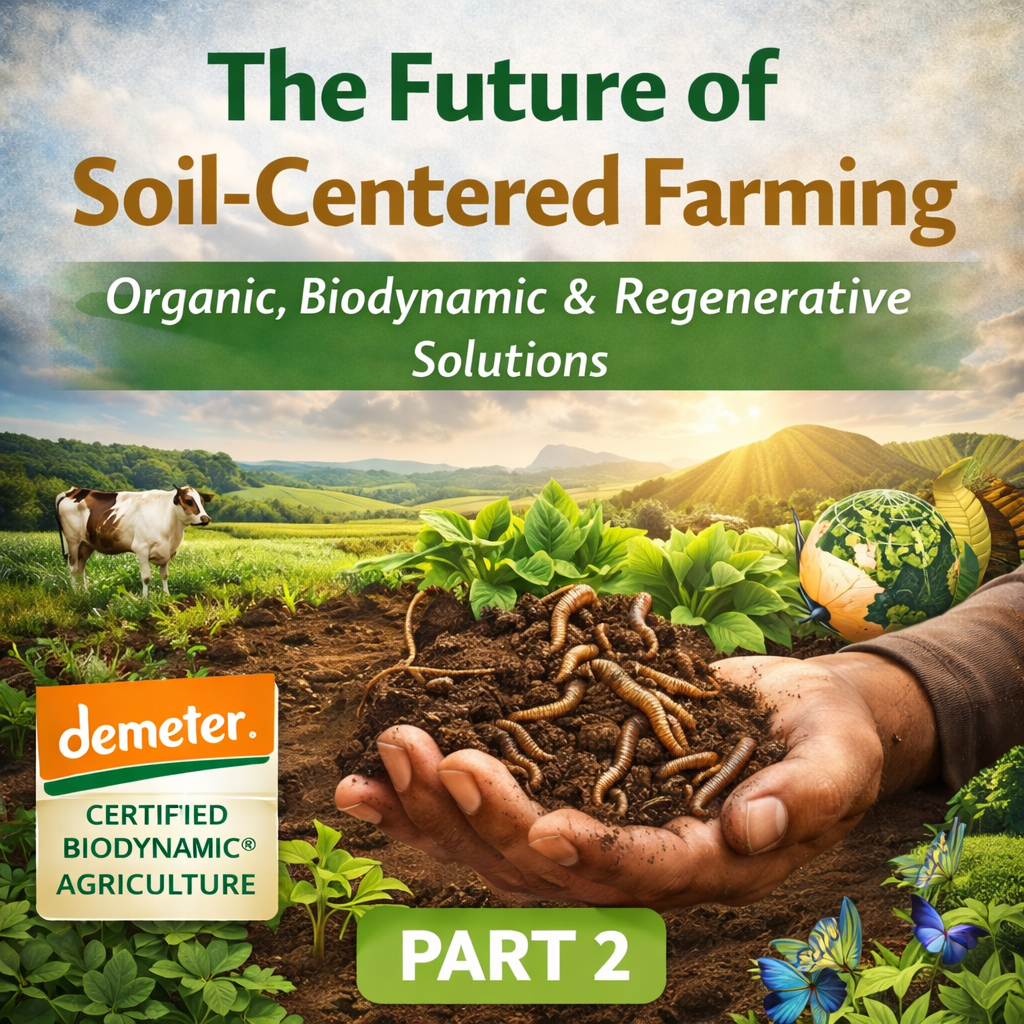
Soil-Centered Farming Methods
When people talk about the future of agriculture, soil often becomes the starting point. Soil-centered farming methods focus on rebuilding the biological life within the soil rather than relying heavily on external inputs.
These methods encourage farmers to work with natural systems. Over time, this can support stronger crops, improved water retention, and more balanced ecosystems.
One of the most recognized research organizations in this space is the Rodale Institute in Pennsylvania. Since 1947, Rodale has studied organic and regenerative systems with a focus on long-term soil health.
The Rodale Institute’s Long-Term Soil Research
Rodale’s Farming Systems Trial (FST), launched in 1981, compares organic and conventional farming side by side. More than 40 years of data have helped researchers better understand how farming practices affect soil over time.
Organic systems often build higher levels of soil organic matter. They also support greater microbial diversity beneath the surface.
Healthy soil microbes help cycle nutrients and support plant growth. Organic management has also been linked to reduced soil compaction, which allows roots to grow more freely.
Researchers have also observed improved water infiltration in organically managed soils. These soils absorb water more efficiently and may reduce runoff during heavy rain.
Rodale has also studied farm economics. In some cases, organic systems show lower operating costs and remain competitive without premium pricing.
Crop yields have been closely tracked. Organic systems can match conventional yields in many years. During drought conditions, some organic plots have produced higher yields.
These findings continue to shape how farmers and researchers think about the future of soil-centered farming.
Sources
Rodale Institute
https://rodaleinstitute.org
The Living Ecosystem Beneath Our Feet
Soil is often overlooked, yet it is one of the most complex ecosystems on Earth.
A single teaspoon of healthy soil can contain billions of organisms. These include bacteria, fungi, protozoa, and other microscopic life.
Together, they form the soil food web. Each organism plays a role in supporting plant health.
Soil bacteria help produce compounds that support plant resilience. Fungi assist plants in absorbing water and nutrients from the surrounding environment.
One of the most fascinating relationships involves mycorrhizal fungi. These fungi connect to plant roots and extend deep into the soil, helping plants access nutrients beyond their immediate reach.
Some scientists describe this network as the “internet of the soil.”
When this system is healthy, plants tend to be more resilient. When it is disrupted, plant health can be affected.
Measuring Soil Health
Farmers and researchers evaluate soil using several key indicators. These include microbial activity, nutrient levels, water retention, and soil structure.
At research sites like Rodale, soil samples are collected and analyzed over time. This helps track how different farming practices influence long-term soil health.
Healthy soil forms stable aggregates. This improves soil structure and helps reduce erosion.
It also absorbs water more efficiently. This supports crops during both heavy rainfall and dry periods.
Why Soil Health Matters for Food and Farming
Soil plays a central role in agriculture and food production. Soil-centered farming methods recognize that everything begins below the surface.
Healthy soil helps grow nutrient-rich crops. It also improves water retention during drought conditions.
Stable soil structure helps prevent erosion. Active microbial communities support plant resilience and balance.
Healthy soil can also absorb water more efficiently, reducing runoff. It plays a role in carbon storage as well, an area researchers continue to study.
Globally, soil loss has become a growing concern. Protecting and rebuilding soil is now a priority in many agricultural systems.
Soil Health Management Principles
To support healthier soil, farmers often follow a few key principles.
Keep Living Roots in the Ground
Living roots feed soil microbes and support biological activity.
Minimize Disturbance
Reducing tillage helps protect soil structure and microbial life.
Keep Soil Covered
Cover crops and plant residue protect soil from erosion and environmental stress.
Encourage Biodiversity
Diverse plant systems support stronger ecosystems above and below ground.
Soil as the Foundation of Agriculture
Soil supports plant growth, water movement, and ecosystem balance. For this reason, many farmers now place greater emphasis on soil stewardship.
Organic, biodynamic, and regenerative farming approaches all work toward this goal. Each offers a different way to support soil health over time.
When soil is healthy, it supports everything built on top of it.
Sources
USDA NRCS
https://www.nrcs.usda.gov
Understanding Organic, Biodynamic & Regenerative Farming
These approaches are often discussed together. Organic, biodynamic, and regenerative farming each offer a unique path forward.
At the same time, they share a common goal—working with nature to support healthier soil systems.
Organic Farming
Organic farming is the most widely recognized of the three systems. In the United States, it is regulated by the USDA.
Organic standards prohibit synthetic herbicides, most synthetic fertilizers, and GMOs. Farmers rely on crop rotation, compost, and natural inputs instead.
The goal is to support ecological balance and maintain soil health.
Biodynamic Farming
Biodynamic farming builds on organic principles while taking a more holistic view.
This approach was influenced by Dr. Rudolf Steiner in the 1920s. It is a holistic approach to agriculture that treats the farm as a living system, where soil, plants, animals, and the surrounding environment all work together. It focuses on building healthy soil, supporting biodiversity, and creating a self-sustaining farm using natural, locally adapted practices.
Products may be certified through Demeter. This certification is an international standard for biodynamic farming that verifies a farm follows strict ecological, soil health, and whole-farm practices. It goes beyond organic by requiring the farm to operate as a self-sustaining, balanced ecosystem.
Regenerative Agriculture
Regenerative agriculture focuses on restoring soil systems and improving long-term resilience.
It is not defined by a single certification. Instead, it is guided by principles such as cover cropping, reduced tillage, and increased biodiversity.
Some regenerative farms are also organic or biodynamic. Others are transitioning toward these practices over time.
Sources
Rodale Institute
https://rodaleinstitute.org
Demeter Certification: https://demeter.net/certification/
Consumer Steps Toward Reducing Agricultural Chemical Exposure
As people learn more about how food is grown, many begin making more informed choices.
Some choose organic foods when possible. Others support farms that use regenerative practices.
Washing produce thoroughly is another common step. Some people also explore water filtration or grow small gardens at home.
Organizations like the Environmental Working Group provide guides to help consumers better understand pesticide exposure trends.
Sources
EWG
https://www.ewg.org/foodnews
A Hopeful Path Forward
At the center of this conversation is a simple idea—healthy soil supports healthy food systems.
Farmers, researchers, and communities are continuing to explore organic, biodynamic, and regenerative farming as part of a more sustainable future.
For many, this work reflects a deeper sense of stewardship.
“The earth is the Lord’s, and everything in it.” — Psalm 24:1
At Martindale’s Natural Market, these values have guided our store for more than 150 years.
Our team has created a dedicated end cap featuring biodynamic and regenerative foods for your convenience. These products offer an opportunity to explore alternatives rooted in soil-centered farming methods.
We are committed to walking with you on your wellness journey. Our goal is to provide thoughtful choices, practical options, and a sense of hope for a brighter future.
“Let food be thy medicine and medicine be thy food.”
We are grateful to serve a community that values connection—to food, to farmers, and to the land.
Educational Disclaimer
This article is intended for educational purposes only. It reflects our understanding of publicly available information at the time of publication. It is not intended to provide medical advice or make health or regulatory claims.
These statements have not been evaluated by the FDA. They are not intended to treat, diagnose, cure or prevent any disease.